Friday, October 30, 2009

SEO Tips

Here a six best step of SEO On page optimization you can read this and improve your SEO skill.

  • Select always a shorts Title up to 60 to 80 character in your web page
  • In the On page activity avoid the java script, flash, frame and image because crawler face difficult to find this.
  • The size of web page is must be less than 50 KB to 60 KB because is have download fast
  • The best way of guide line is that create a site map of your site because all the page of your website is read by search crawler.
  • Avoid spam and never do any work like clocking, keywords spamming and door way pages. And also have unique content in your site.
  • You can never use any script or automated submission in your site.

Thursday, October 8, 2009

Contact Us

You can mail us at: tochandresh@gmail.com

You can call us at:

+91-9953098294 at any time

We are also available on

tochandresh@hotmail.com

Thursday, September 10, 2009

Search Engine optimization

Search engine optimization is process to making visible of your website in search engine. Then with help of this more number of visitors is reach on website with selected keywords and then your business is increase day by day. The Search Engine optimization is of two types:

  • On page optimization
  • Off page optimization

Off page optimization


The term off page optimization is also known as the website optimization technique and implementation that help website search engine ranking and that are not implemented directly on the website page. In search engine optimization off page optimization show that factor have an effect on your website but these factors are off site to web page and not controlled by you and your web page coding.

The off page optimization is done after the completion of on-page SEO.

Community Creation in Social Networking Sites

Try to become a member of the most popular social networking sites like Orkut, MySpace, Face book, Linked In, Academy, etc., and create a profile of your own. By doing this you can extend your network online, get connect with your friends, share things with each other, and promote your company/website to build an online reputation. This is most likely the same as Web 2.0 Participatory Web, which means you, has to show your active participation on a regular basis.

Blogging

Write a blog of your own for your company website and include lots of unique content. Be precise in what you are trying to convey for the users in your blog entry and promote your blog in blog directories and blog search engines. You can also promote your blog website by posting comments in other service related blogs which allow links in the comments section that are crawlable by the search engines these blogs are commonly identified as Do-Follow Blogs. If you are not very good at writing content for blog posts, hire a guest blogger for your blog and ask him to write precise and unique content so that your blog can gain more credit from a search engine point of view.

Forum Postings

Create a forum online discussion board of your own and start a discussion or share topics with your friends. You can also post reply to a thread in other service-related pre-existing forums that allow links in your signature which can be crawled by the search engines aka Do-Follow Forums.

Search Engine Submission

Submit your website to the most popular search engines like Google, Yahoo, MSN, Altavista, Alexa, Alltheweb, Lycos, Excite, etc., to get listed for free.

Directory Submission

Many people may say that directory submission is dead. As far as Iam concerned it is still alive. It is purely based on how effectively we are selecting those directories and how efficiently we are choosing the category for submission. Of course, I agree that it gives quite delayed results, but it is worth doing it. Submit your websites to the topmost quality directories like DMOZ, Yahoo Directory, ZoomInfo, One Mission, Pegasus, etc. Nowadays many web directories may offer paid listings but don't go for it.

Social Bookmarking

Social Bookmarking is yet another powerful way of promoting your website, but nowadays most people are spamming social bookmarking sites without knowing how to use them. Since content in these websites update frequently, search engines like these types of sites and often visit them this is commonly termed as Tagsonomy & Folksonomy in Web 2.0. Do some social bookmarking in popular bookmarking sites like Digg, Delicious, Stumble Upon, Propeller, etc. You should be very careful while doing this and you must properly handle the tags which are very essential to broadcast your news on a wide area network. This may increase your website traffic based on how effectively you have participated.

Link Exchange

Exchange links with service-related websites this is commonly termed as Thematic Link Exchange that can help increase your link popularity, which is a major factor of Google's Page Rank algorithm. Beware of Black-Hats while doing exchanges.

Link Baiting

Suppose you have copied/published another website's news or content in your blog/website. Don't forget to place their website link as a reference. Do it for others and, if your content is trustworthy, let others do it for you. This is another way to increase your link popularity.

Cross-Linking

Link to internal pages within your site wherever necessary (this is commonly termed Internal Linking). This increases your internal link popularity, which is another major factor of Google Page Rank algorithm. The best known example of successful internal linking is Wikipedia. Also try to get a content link from websites/blogs that are related to your site theme. Try getting a link from within their site content using a targeted keyword as anchor text (much like Wikipedia does). We know that this strategy can often be hard to implement, but these types of links have more weight from a search engine point of view.

Photo Sharing

Publish share your website product pictures and make them public. Let your friends see them and comment on them too, which will help drive traffic towards your website. Do this in major photo sharing websites like Flicker, Picasa, Photo Bucket, Picli, etc.

Video Promotions

Like with photo sharing, you can publish share your product videos, expert opinions, and reviews of your product and make them public in YouTube, Met café, Daily motion, etc.


On page optimization


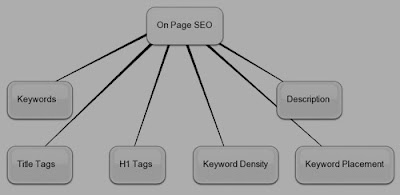
The term on page optimization is also known as the website optimization and implementation technique that are directly related to the content and structure of the website. The on page optimization refers to a factor that has effect on your website. This factor is controlled by you and your web age coding, content and title tag and several Meta tag.


There are many tactics one can work with to optimize site pages for on-page SEO which may result in a higher rank for each of your site’s web pages.

Here are the following stapes of on-page SEO:

  • The Meta Keywords, Description and Robots tag — Google used description copy to market your site in its results, treat this as optimized sales copy. Make sure your sitemap.xml page is CONSTANTLY called up to the search engines
  • The Title Tag – The MOST important aspect of on-page SEO, just take our word for it.
  • The Body Text :- focus on the body text in bold, for this denotes strong emphasis to the search engines
  • The first sentence in the body text and the first words used per sentence are the most important ones for advanced on-page SEO necessities (Make it humanly readable and SE readable — The words used in the first sentence are most important due to the implementation of Google’s LSI algorithm)
  • The URL — The subdirectory folder and page of content should be SEO’d (i.e. http://domain.com/real-estate/real-estate-marketing-ideas.com would fetch a high ranking for a page dedicated to real estate marketing ideas – especially with many highly authoritative, relevant, deep in-bound links)
  • The H1 and H2 Texts are highly important – Why? They show the search engine the main subjects and Table of Contents for the content to be indexed. Make this keyword friendly and reflective of your page’s title tag.
  • Same Site Link Texts — The links connecting the pages of your site together must have your targeted keyword terms in them as well as all links throughout the site — even though it seems excessive, having variations to your targeted keywords would also help when linking out to other pages within your site.
  • Same-Site Link URLs — Not only should you be using your keywords to describe pages within your site, those URLs you link to must have SEO URLs ( eg: http://domain.com/your-keyword.html)
  • Outbound Link Text — Resources you link to must be SEO’d – If you are an internet marketing site and arelinking to an email marketing company (email marketing software in this instance), you would use “Put your internet marketing on auto-pilot and use the best tool for internet marketers today – internet marketing email software. Then just use other variants to internet marketing.
  • IMG Alt Tags — Your images should be described via ALT Tags with the keywords you are optimizing for – If your image is hosted on your web-host, the file name of the images should also be SEO’d — If you have an image about polar bears have it be polar-bear.jpg in your images folder.

  • Keyword Density- 8% is excellent and doesn’t seem spam, if you have a 500 word article, then 40 of those words should have variances of the search term you are targeting, if this seems excessive, lower the keyword density down to 5% and you will only need to add 25 variances/instances of your keyword. And that’s just a start… Keyword prominence is big, but not worth a discussion.
  • Lastly and surprisingly-Your HTML comments should have your SEO terms in them — as a question to the relevancy this has to your ranking, I am unsure, but most of the large sites have html comments connected to their search terms. If you end up doing an analysis of your one-page content, you can find out if the high ranked sites for your keyword use HTML comments tagged to the keyword being targeted.